When AI became the laboratory itself
The Lab Goes Digital
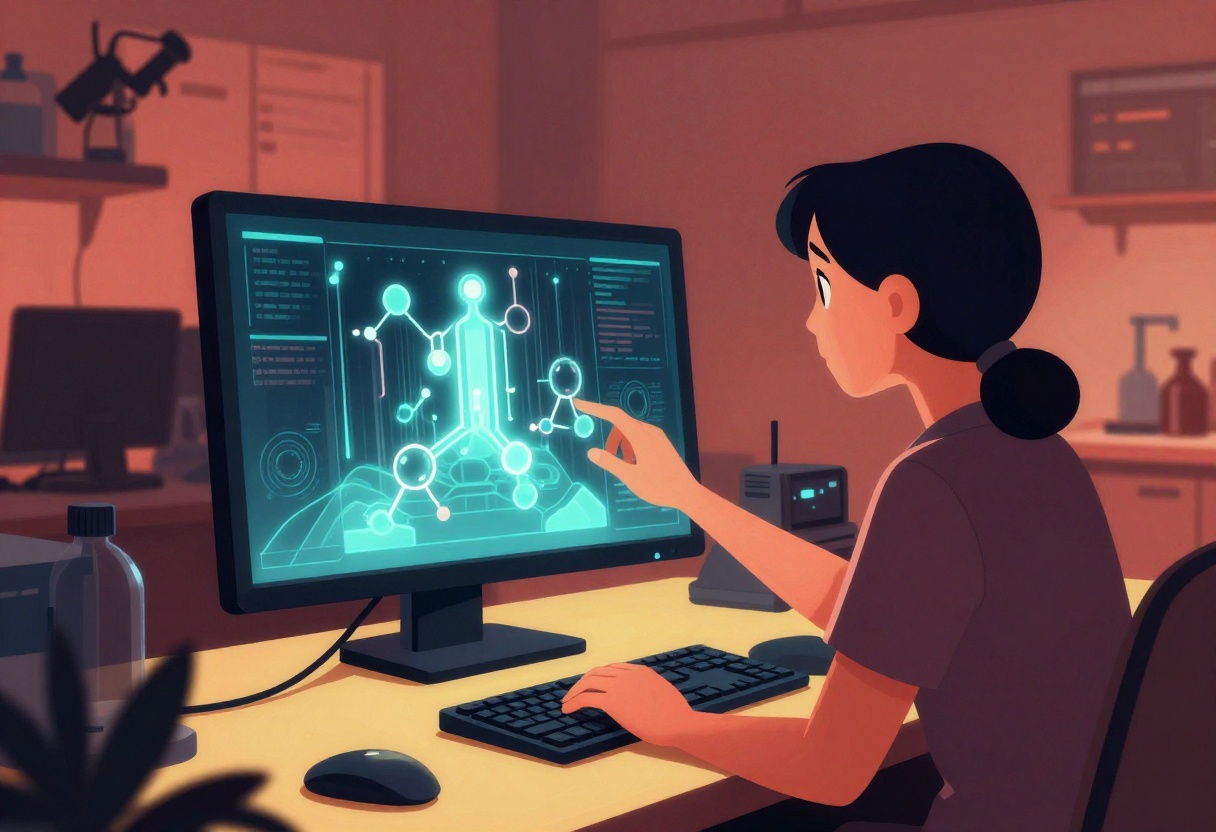
In 2023, a memo arrived at research universities across America.
The U.S.
Department of Energy had money.
Not small money.
Millions of dollars, waiting for scientists brave enough to let machines run the experiments.
The Genesis Mission was its name.
Two hundred and seventy-eight AI science projects.
That's not a pilot program.
That's a bet.
That's the federal government saying: we think artificial intelligence can see things we cannot.
Emory University got funding.
So did UT Austin.
USC too.
Chemistry labs and physics departments and biology research centers suddenly had access to systems that could process data at speeds that would have required teams of humans working for decades.
The labs didn't need to rebuild their equipment.
They needed to rethink what equipment meant.
A scientist at one institution described the moment the AI system flagged an anomaly in their data set.
Something faint.
Something a human eye scrolling through would miss.
It was there.
Buried in the noise.
The machine had found a pattern.
That's when the question shifted.
For a hundred years, scientific discovery looked like this: hypothesis, experiment, observe, conclude.
A human asks the question.
A machine answers.
The human decides what the answer means.
But what happens when the machine asks the question?