Why We Forget How Vulnerable We Always Were
The Day the Sky Fell
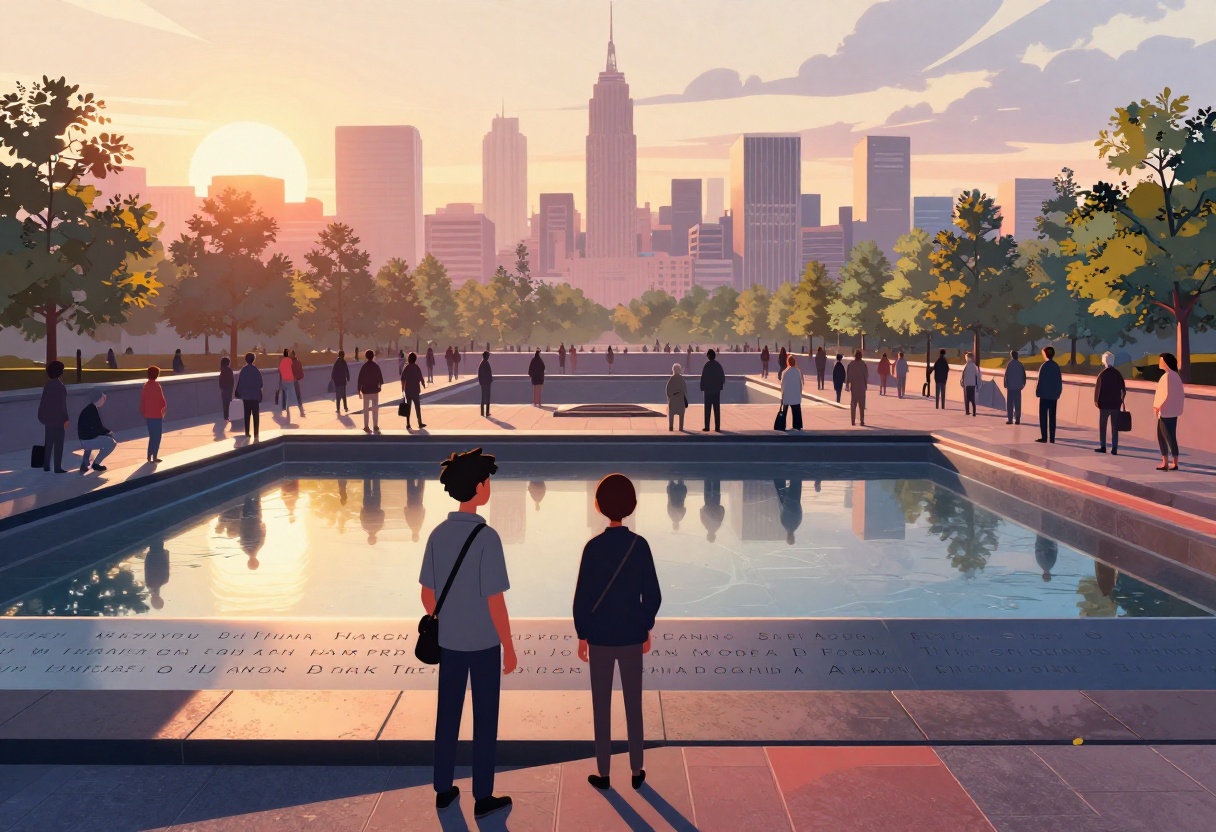
Twenty-five years later, the memorial site fills with people who didn't see the towers burn.
They come because they were told to remember. Their parents whisper dates. Teachers assign essays. The Wikipedia page for the September 11 attacks ranked number five on the platform's most-viewed list the day after the 2026 anniversary—430,057 views in a single day. People searching for what happened. People searching for proof that it mattered.
But here's what nobody says out loud: memory and time are enemies.
A man stands at the reflecting pool. He watched both towers fall live on television. He hasn't returned here in eight years. Around him, teenagers take selfies. Not to be cruel. They simply don't carry the weight. For them, 9/11 is history, abstract as the Cold War, distant as Pearl Harbor.
The vulnerability that defined a generation for twenty-five years is becoming a story they heard. A tragedy their parents survived. Not something their bones remember.
Why do societies forget how fragile everything is?