Why Dying Stars Create Beauty
The Last Light: What Happens When Stars Fail
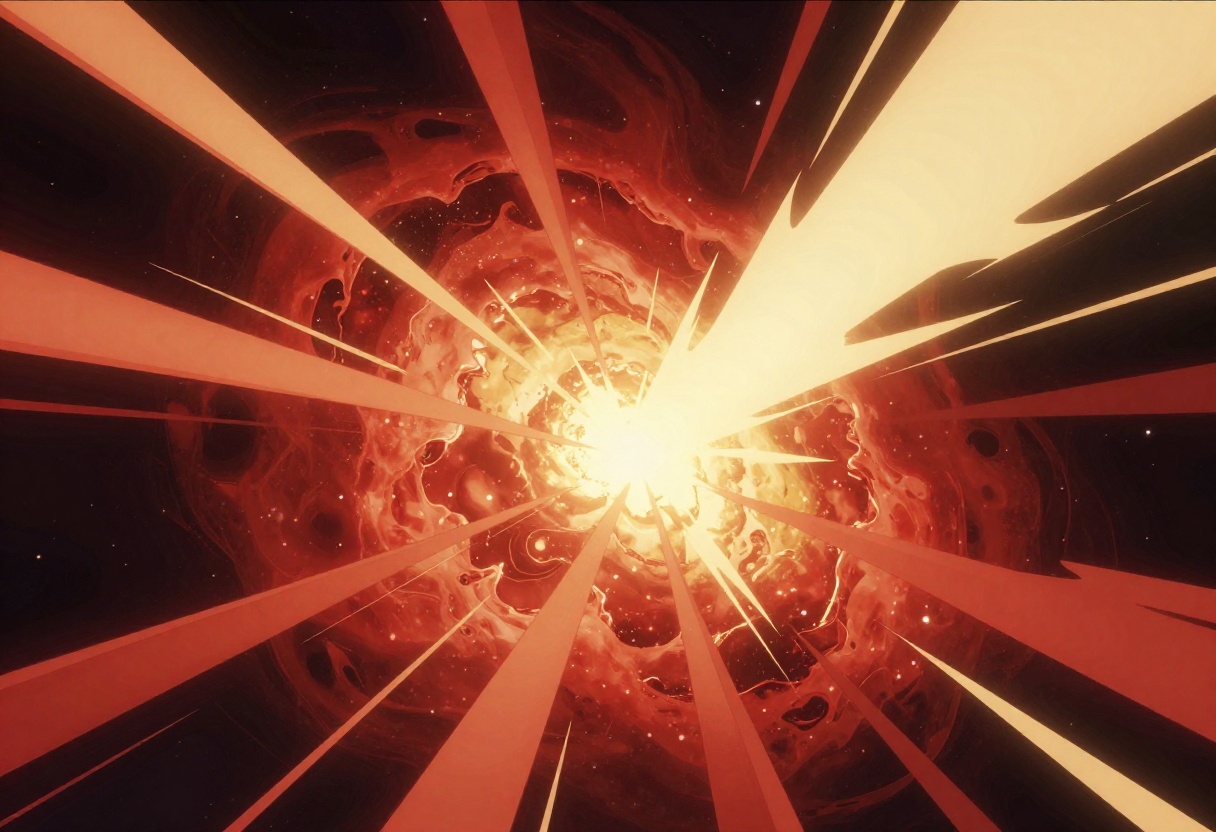
A star dies slowly. First it swells. Its core burns hotter and hotter until it can barely hold itself together. Then something breaks. The pressure fails. Gravity wins. In seconds, the star's entire outer layer—billions of tons of superheated gas—collapses inward at a quarter the speed of light.
Then the rebound.
The core is so dense, so violently compressed, that it pushes back with unimaginable force. The falling material hits a wall of neutron-degenerate matter and explodes outward in a shockwave. Light floods the universe. For a few days, a single dying star shines brighter than an entire galaxy. Astronomers call it a supernova. In that flash, the star's interior—elements forged over billions of years—scatters into the cosmos. Iron. Oxygen. Silicon. Carbon. The raw materials for planets. For life.
But here is the mystery that stops physicists cold: Why does this apocalypse look so beautiful?
Why does stellar death paint the sky with color?