When Two Telescopes See the Same Thing Differently
Two Instruments, One Sky
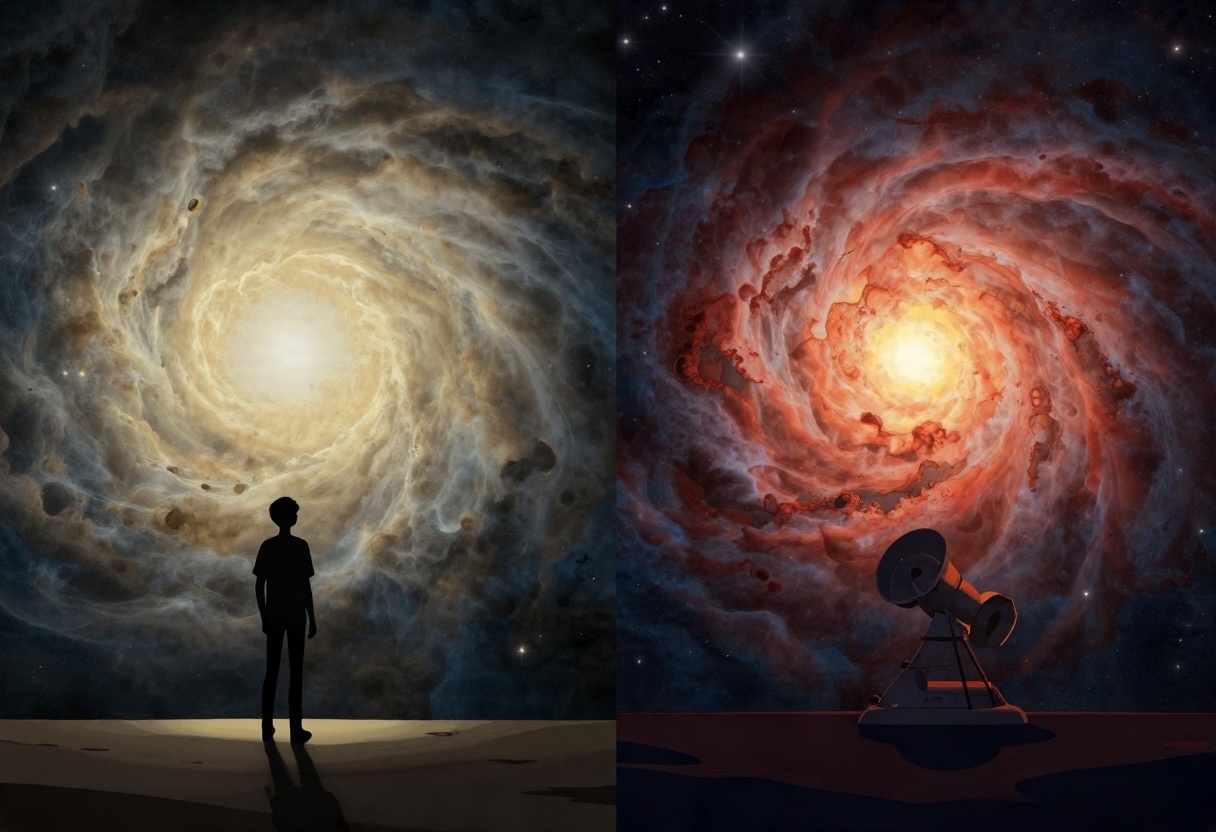
On a Tuesday in 2023, two space telescopes pointed at the same patch of sky. The same nebula. The same stars being born inside clouds of dust and gas. Hubble had been watching for decades. It saw what human eyes would see if they could somehow float in space—visible light bouncing off particles, creating shadows and silhouettes against a cosmic background. Beautiful. Haunting. Incomplete.
Webb arrived later, equipped with infrared sensors that could pierce through the dust. It saw the same nebula and saw something Hubble couldn't. Stars hidden inside the clouds. Stellar nurseries glowing with heat. Structures and secrets wrapped in darkness.
The Cat's Head Nebula became the test case. Two instruments. Same target. Radically different stories. Astronomers called them complementary views. But there was something stranger happening here. The same light was being split by technology into different truths. One universe filtered through visible wavelengths. Another through infrared. Which one was real?
Both. Neither. And that's where the mystery begins.